Find Healing Through Play
Why Play Therapy?
Play is the natural way children understand the world, express their feelings, and prepare for what comes next. Play Therapy uses this natural language to help children explore challenges, gain insight, and move forward with confidence and growth.

Play across the lifespan
Play is not only essential for kids but as adults we continue to explore and learn through play. Many teens and adults have an inner child that deserves to be acknowledged and explored. I use experiential modalities, such as Sandtray and Expressive Arts with individuals of all ages to support processing and self-discovery.
Click to find out more about some of the interventions and approaches I use
-
Digital Play Therapy utilizes the same play therapy techniques just in the digital world. Video games offer a new way to play and enter a child’s world. DPT allows for more avenues of exploration and therapeutic work in a non-traditional way.
-
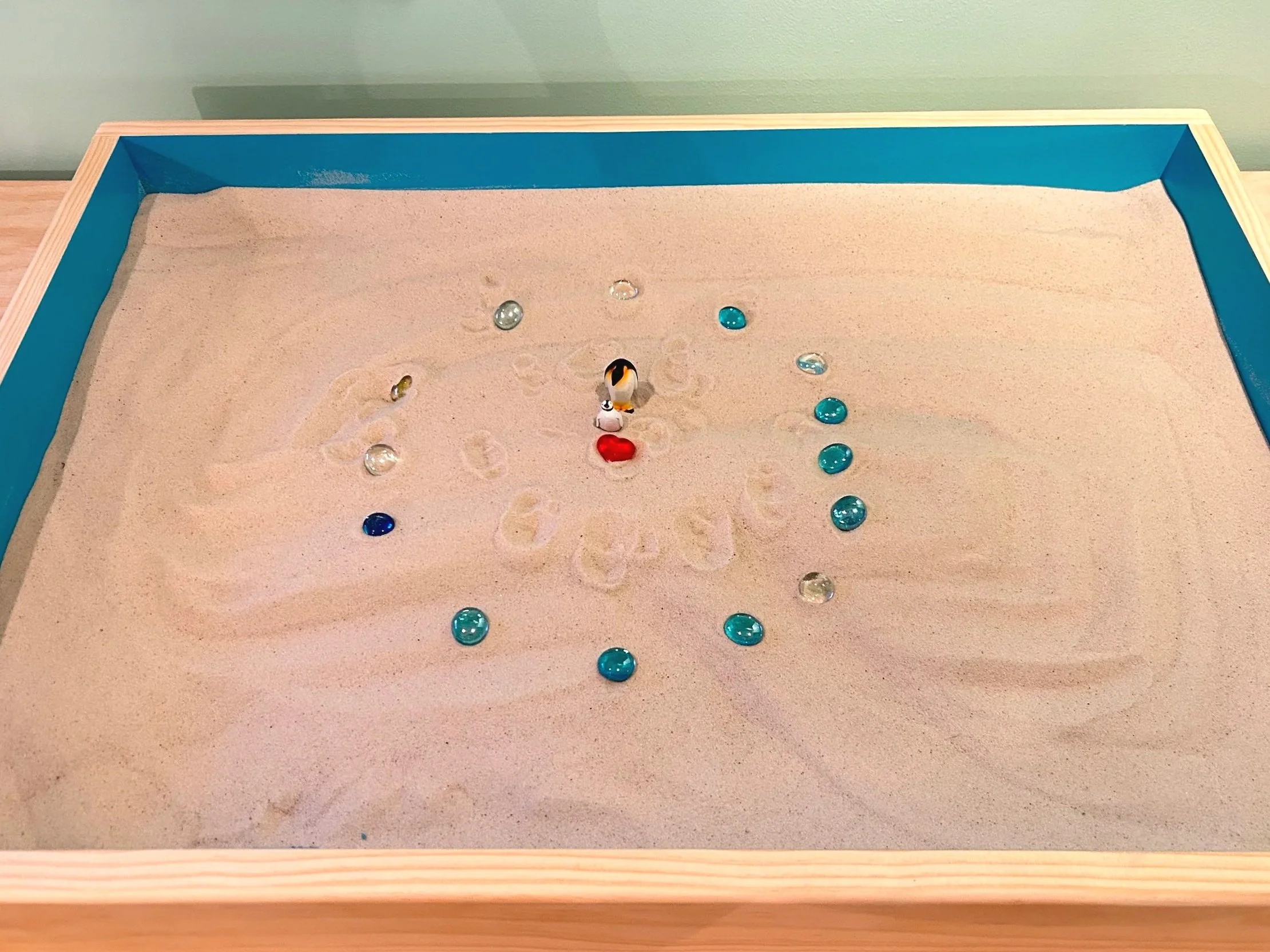
Another modality you’ll find in the play therapy space is the sand tray. Sand is a naturally grounding and healing medium and is used as a projective tool to allow your child to communicate their internal world without using words. Sand Tray therapy allows the person to see their world in front of them in the tray.
-
Toys are tools for kids to communicate their inner worlds. The toys a child uses during a session equates to the words we choose to speak with as adults. Each toy in the playroom is carefully selected to serve a therapeutic purpose.
-
Art in the Play room is another important tool used for healing. Art allows kids to explore themselves and their feelings through the various mediums (markers, paint, clay, etc.) That freedom allows for freedom to explore, grow and build trust within themselves.
-
This is a neurodiverse framework I use to guide my play therapy sessions. This framework tells us therapists that no matter how a person plays, their play is regulating and supports processing. All play is accepted in the play room and is especially true for children on the Autism Spectrum. When kids come into the play room, they do not have to change their play to be neurotypical.